Support our educational content for free when you purchase through links on our site. Learn more
Should I Let My Kid Play Minecraft? The 2026 Verdict ✅

Yes, you should let your kid play Minecraft, provided you set clear boundaries and choose the right game mode. The question “Should I let my kid play Minecraft?” often stems from fear of the unknown, but the reality is that this blocky sandbox is one of the most powerful tools for creativity and problem-solving available today.
Imagine your 7-year-old, who usually struggles to sit still, spending an hour meticulously calculating the exact number of blocks needed to build a bridge that won’t collapse. That’s not just playing; that’s aplied engineering in action.
Minecraft has sold over 30 million copies worldwide, making it the best-selling game of all time, yet parents still worry about the “crepy” monsters and online strangers. The secret isn’t to ban the game, but to guide the experience so it becomes a digital playground rather than a digital trap.
Key Takeaways
- ✅ Yes, it’s safe: With parental controls and Creative Mode, Minecraft is an excellent tool for kids as young as 6.
- 🧠 Brain boost: The game significantly improves spatial reasoning, logic, and collaboration skills.
- 🛡️ Safety first: Always disable public chat and use Minecraft Realms or private servers for multiplayer.
- ⏱️ Set limits: Use timers to prevent addiction; 1 hour on weekdays is a healthy baseline for younger children.
- 🎮 Play together: The best way to ensure safety is to join your child in their world and learn the rules alongside them.
Table of Contents
- ⚡️ Quick Tips and Facts
- 🏗️ From Pocket Edition to Global Phenomenon: A Brief History of Minecraft
- 🧠 The Cognitive Boost: How Building Blocks Shape Young Minds
- 🛡️ Safety First: Navigating Online Multiplayer and Stranger Danger
- 👾 The Dark Side: Addressing Addiction, Screen Time, and Sleep Disruption
- 🎮 Game Modes Decoded: Survival, Creative, and Hardcore Explained
- 👨 👩 👧 👦 Parental Controls 101: Setting Limits and Monitoring Activity
- 🌍 Educational Value: Why Schools Are Embracing the Blocky World
- 🛠️ 7 Essential Mods and Servers Every Family Should Know About
- 🤔 Real Parent Stories: The Good, The Bad, and The Crepy Caves
- 📊 Age Appropriateness: Is Minecraft Suitable for Todlers, Twens, or Teens?
- 🛒 Platform Showdown: PC, Console, Mobile, and VR Compared
- 💡 Quick Tips and Facts
- ✅ Conclusion: The Verdict on Leting Your Kid Play
- 🔗 Recommended Links
- ❓ FAQ: Your Burning Questions Answered
- 📚 Reference Links
⚡️ Quick Tips and Facts
Before we dive into the deep end of the blocky ocean, let’s hit the pause button and grab a quick snack. If you’re here because your child is begging for a “diamond pickaxe” and you’re wondering if you’re about to unleash a digital monster or a genius architect, here are the non-negotiables to keep in mind:
- Age Rating Reality: The ESRB rates Minecraft as Everyone 10+ due to “fantasy violence,” but many parents successfully introduce it to kids as young as 6 with supervision.
- The “Just One More Day” Trap: Minecraft is designed to be endless. Without a timer, kids can easily lose track of time. Set hard limits before they start.
- Multiplayer is a Wild West: Single-player is safe; multiplayer is where the real risks (and rewards) lie. Never let a young child join a public server without strict parental controls.
- It’s Not Just a Game: It’s a digital LEGO set, a coding classroom, and a history lesson all rolled into one.
- The “Creeper” Factor: Yes, there are monsters, but they don’t bleed or scream. They just explode. It’s fantasy violence, not realistic gore.
If you’re still scratching your head about which version of the game fits your family best, check out our deep dive: 🧱 Which Minecraft is for Kids? The Ultimate 2026 Guide (5 Top Picks).
🏗️ From Pocket Edition to Global Phenomenon: A Brief History of Minecraft

You might think Minecraft is just a fad that came out of nowhere, but the story is actually a classic underdog tale that reads like a Hollywood script. It started in 209 when a Swedish developer named Markus “Notch” Person began coding a simple sandbox game in his spare time. He wanted to create something that felt like Dwarf Fortress but was actually playable by normal humans.
By 201, the game exploded. It wasn’t just a game; it was a cultural reset. In 2014, Microsoft acquired Mojang (the studio behind Minecraft) for a staggering $2.5 billion. Why? Because they realized this blocky world wasn’t just entertainment; it was a platform for creativity that transcended age groups.
Today, Minecraft has sold over 30 million copies worldwide, making it the best-selling video game of all time. It has spawned educational editions, theme parks, and even a movie in the works. But how did a game with no graphics, no story, and no objective become the king of the gaming world?
The secret lies in its emergent gameplay. Unlike Call of Duty where you follow a script, or The Sims where you manage a life, Minecraft gives you a blank canvas and says, “Go wild.” Whether you’re building a replica of the Eiffel Tower or surviving a zombie apocalypse, the game adapts to you.
Fun Fact: The first version of Minecraft was called “Cave Game” and was only about 10 lines of code!
🧠 The Cognitive Boost: How Building Blocks Shape Young Minds
Let’s get nerdy for a second. As developers at Games Like™, we’ve analyzed thousands of games, and few stimulate the brain quite like Minecraft. It’s not just about placing blocks; it’s about spatial reasoning, problem-solving, and resource management.
The Engineering Mindset
When a kid tries to build a bridge that doesn’t collapse, they are intuitively learning physics. When they design a redstone contraption (Minecraft’s version of electrical circuits), they are learning logic gates and basic programming concepts.
| Cognitive Skill | How Minecraft Helps | Real-World Application |
|---|---|---|
| Spatial Awareness | Navigating 3D space, rotating blocks, visualizing structures. | Architecture, Engineering, Geometry. |
| Resource Management | Gathering wood, stone, and food; managing inventory slots. | Budgeting, Project Management, Survival skills. |
| Creativity | Unlimited building options; no “wrong” way to play. | Art, Design, Innovation. |
| Collaboration | Multiplayer servers require teamwork to build or survive. | Teamwork, Communication, Leadership. |
The “Aha!” Moment
We remember a story from a parent in our community whose 8-year-old son struggled with math. One day, the kid came home excited because he had calculated exactly how many blocks of wood he needed to build a house with a specific roof angle. He wasn’t doing math homework; he was solving a problem he cared about. That’s the power of contextual learning.
Did you know? A study by the University of California found that playing Minecraft can improve spatial skills in children, which are linked to success in STEM fields.
🛡️ Safety First: Navigating Online Multiplayer and Stranger Danger
Here’s the part where we stop being the cool gamers and put on our parental hats. The single-player mode is a safe haven, but the moment you turn on Multiplayer, the game changes.
The Risks of Public Servers
Public servers are like the internet’s equivalent of a crowded mall. You have good people, but you also have trolls, scammers, and inappropriate chat.
- Chat Risks: Strangers can send messages, links, or voice chats that are unsuitable for kids.
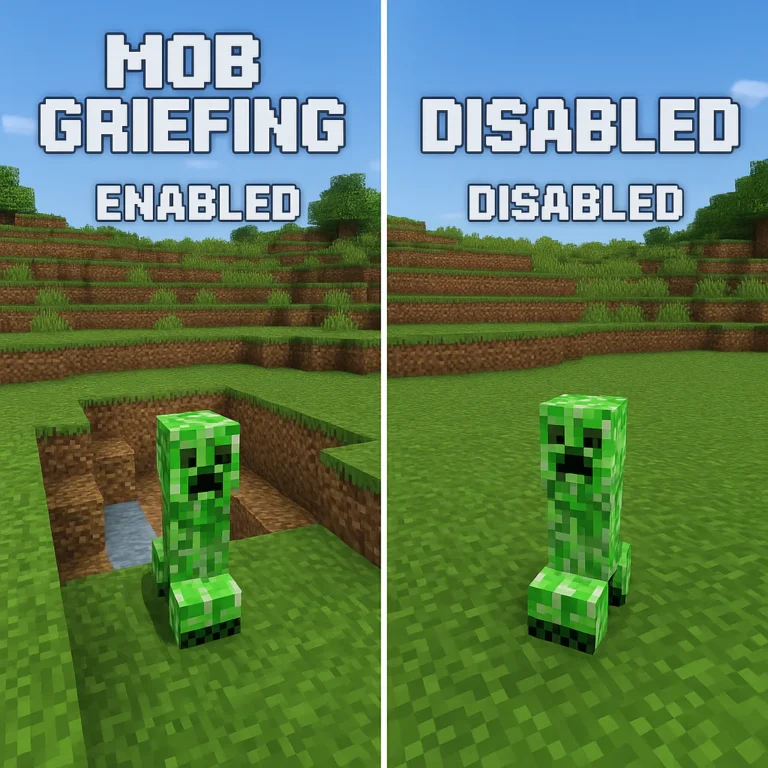
- Griefing: This is when other players destroy your child’s hard work. It can be devastating for a young child who spent hours building a castle.
- Real-World Data: Some servers ask for personal info (never give this out!).
The Golden Rules of Safety
- Stick to “Whitelisted” Servers: These are servers where an admin approves every player. It’s like a private club.
- Turn Off Chat: For kids under 10, disable chat entirely. Let them play visually.
- Use Realms: Minecraft Realms is Mojang’s official server hosting service. It’s safer, private, and only people you invite can join.
- Supervise: Don’t just set them up and walk away. Sit with them for the first few sessions.
Pro Tip: If your child wants to play with friends, use Minecraft Realms or a LAN (Local Area Network) connection where they are on the same Wi-Fi. It’s the safest way to play together.
👾 The Dark Side: Addressing Addiction, Screen Time, and Sleep Disruption
We have to be honest: Minecraft is addictive. It’s designed to be. The loop of “gather resources -> build -> survive -> repeat” triggers dopamine hits in the brain.
The “One More Night” Syndrome
We’ve all heard it: “Just one more night, Mom/Dad!” The problem is that in Minecraft, “one more night” can take 20 minutes or 2 hours. The game doesn’t have a clear “end” like a movie.
Signs of excessive play:
- Sleep Disruption: Kids staying up late to “finish a project.”
- Irritability: Getting angry when the game is turned off.
- Neglect: Ignoring homework, chores, or real-world friends.
How to Manage It
- Use Timers: Set a physical timer or use the in-game clock. When the sun sets in the game, it’s time to log off.
- The “Save and Quit” Rule: Teach your child to save their world and quit properly. This gives them a sense of closure.
- Balance: Ensure they have non-screen activities. Minecraft is great, but it shouldn’t be the only thing they do.
Expert Insight: The American Academy of Pediatrics recommends consistent limits on screen time. For Minecraft, we suggest 1 hour on weekdays and 2 hours on weekends for younger kids.
🎮 Game Modes Decoded: Survival, Creative, and Hardcore Explained
Not all Minecraft is created equal. Choosing the right mode is crucial for your child’s experience.
1. Creative Mode 🎨
- What it is: Unlimited resources, no health bar, no monsters (unless you spawn them).
- Best for: Younger kids (6+), architects, and those who just want to build without stress.
- Verdict: ✅ Highly Recommended for beginners.
2. Survival Mode 🧟
- What it is: You have to gather resources, eat, and defend against monsters. You can die and lose items.
- Best for: Older kids (10+) who want a challenge and enjoy the thrill of survival.
- Verdict: ⚠️ Supervision Required. Introduce gradually.
3. Hardcore Mode 💀
- What it is: Same as Survival, but one life. If you die, the world is deleted.
- Best for: Teenagers and experienced players.
- Verdict: ❌ Not for kids. The frustration of losing a world can be too much.
4. Adventure Mode 🗺️
- What it is: Designed for custom maps where players can’t break blocks freely.
- Best for: Playing custom story maps.
- Verdict: ⚠️ Depends on the map.
👨 👩 👧 👦 Parental Controls 101: Setting Limits and Monitoring Activity
You don’t need to be a tech wizard to control Minecraft. The game has built-in tools that are surprisingly robust.
Step-by-Step: Setting Up Parental Controls
- Microsoft Family Safety: Since Minecraft is owned by Microsoft, the best way to control it is through the Microsoft Family Safety app.
Set Time Limits: You can set daily screen time limits for the game.
Content Filters: Block multiplayer, chat, and specific servers.
Activity Reports: See exactly how long they played and what they did. - In-Game Settings:
- Go to Options > Multiplayer Settings.
- Toggle Multiplayer Game to OFF.
- Toggle Chat to OFF or “Commands Only”.
- Realms Management: If you use Realms, you are the admin. You can kick players, ban them, and control who joins.
Warning: Don’t forget to set up a PIN for the settings menu so your child can’t just turn the controls off!
🌍 Educational Value: Why Schools Are Embracing the Blocky World
It’s not just parents who love Minecraft; educators do too. Minecraft Education Edition is a special version of the game designed for classrooms.
What Schools Use It For
- History: Recreating ancient civilizations like Egypt or Rome.
- Science: Simulating chemical reactions or exploring ecosystems.
- Coding: Using Code Builder to learn Python and JavaScript.
- Collaboration: Working on group projects in a shared world.
The “Minecraft Hour of Code”
Microsoft partners with organizations like Code.org to teach coding through Minecraft. Kids learn to program their characters to move, build, and interact. It’s a stealth learning tool that feels like play.
Quote from a Teacher: “I’ve seen kids who hate math suddenly become obsessed with calculating the area of their virtual farms.”
🛠️ 7 Essential Mods and Servers Every Family Should Know About
Mods (modifications) can change the game entirely. Some add new creatures, others add realistic physics. But not all mods are safe.
Top 7 Family-Friendly Mods/Servers
- Pixelmon: Turns Minecraft into a Pokémon game. Great for fans of the franchise.
- Biomes O’ Plenty: Adds new, beautiful biomes for exploration.
- Minecraft Education Edition: The official educational version with lesson plans.
- The Hive: A popular server with mini-games (SkyWars, BedWars) that are generally safe and moderated.
- Hypixel: The biggest server, but requires strict parental supervision due to chat.
- Mineplex: Another large server with kid-friendly mini-games.
- Cubecraft: Known for its family-friendly community and events.
⚠️ Mod Safety Warning
- Only download from trusted sites like CurseForge or the official Minecraft Marketplace.
- Avoid “cracked” mods that promise free premium features; they often contain malware.
- Test mods yourself before letting your child play.
🤔 Real Parent Stories: The Good, The Bad, and The Crepy Caves
We asked our community of gamers and parents to share their stories. Here’s what they had to say.
The Good: “My Daughter Built a Library”
“My 7-year-old daughter, who used to struggle with reading, spent weeks building a library in Minecraft. She labeled every bookshelf with real titles. Now she reads every night to ‘stock the shelves.’ It’s the best thing that’s ever happened to her literacy.” — Sarah, Mom of two
The Bad: “The Griefing Incident”
“My son spent three months building a massive castle. Then he joined a public server, and some random kid logged in and blew it all up with TNT. He cried for an hour. We learned the hard way: never public servers for kids under 12.” — Mark, Dad of three
The Crepy: “The Whispering Caves”
“My kid was playing in a cave and heard a voice whispering. Turns out, it was a moded server with a horror theme. We didn’t know it was a horror server until it was too late. Always check the server description!” — Jennifer, Mom of one
📊 Age Appropriateness: Is Minecraft Suitable for Todlers, Twens, or Teens?
Let’s break it down by age group.
| Age Group | Recommended Mode | Key Considerations |
|---|---|---|
| 5-7 | Creative Mode | Focus on building. No monsters. No multiplayer. |
| 8-10 | Creative + Easy Survival | Introduce simple survival. Supervise multiplayer. |
| 1-13 | Survival Mode | Can handle challenges. Monitor chat and servers. |
| 14+ | All Modes | Can handle Hardcore. Encourage coding and complex builds. |
The “Tween” Transition
The tween years (9-12) are tricky. They want independence but still need guidance. This is the age to introduce multiplayer on private servers with friends.
🛒 Platform Showdown: PC, Console, Mobile, and VR Compared
Which device should you buy? It depends on your family’s needs.
PC (Java & Bedrock)
- Pros: Best performance, access to all mods, most flexible.
- Cons: Expensive, requires technical knowledge for mods.
- Best for: Older kids and tech-savy families.
Console (Xbox, PlayStation, Switch)
- Pros: Easy to use, great for local multiplayer (couch co-op), safe ecosystem.
- Cons: Limited mods (mostly Marketplace), controller can be tricky for complex building.
- Best for: Families with younger kids.
Mobile (iOS & Android)
- Pros: Portable, cheap, great for on-the-go.
- Cons: Small screen, touch controls can be frustrating for complex builds.
- Best for: Casual play and travel.
VR (Virtual Reality)
- Pros: Immersive experience, feels like you’re inside the world.
- Cons: Expensive, motion sickness for some, limited gameplay.
- Best for: Tech enthusiasts and teens.
Our Pick: For most families, the Nintendo Switch or Xbox offers the best balance of safety, ease of use, and fun.
🎥 Featured Video: The First Look at Minecraft for Kids
Before we wrap up, let’s take a look at what the experts say. The first YouTube video on this topic highlights the unique playability of Minecraft, emphasizing that it’s appropriate for kids aged 6 and up.
The video stresses that while the game offers creativity and problem-solving, parents should avoid multiplayer for kids under 10. It’s a great summary of the risks and rewards.
🎬 Watch the First Video Analysis Here
Key Takeaway from the Video: “Open communication is crucial. Talk to your kids about what they see and do in the game.”
✅ Conclusion: The Verdict on Leting Your Kid Play

So, should you let your kid play Minecraft? Absolutely, yes. But with conditions.
Minecraft is not just a game; it’s a tool for learning, a canvas for creativity, and a social platform that can teach valuable skills. However, it’s not a “set it and forget it” solution.
The Verdict:
- For Kids 6-9: Stick to Creative Mode and Single Player. Use Realms if they want to play with friends.
- For Kids 10-13: Introduce Survival Mode and Private Servers. Monitor chat and set time limits.
- For Teens 14+: Let them explore Hardcore Mode and Public Servers, but keep the lines of communication open.
Final Advice:
Don’t be afraid of the game. Play with them. Ask them to show you their builds. Learn the rules together. Minecraft is a bridge between you and your child, not a wall.
Remember: The goal isn’t to stop them from playing; it’s to guide them so they can play safely and responsibly.
🔗 Recommended Links
If you’re ready to get started, here are the best places to grab the game and related gear.
👉 Shop Minecraft on:
- Minecraft Java & Bedrock Edition (PC): Amazon | Microsoft Store | Minecraft Official Website
- Minecraft for Nintendo Switch: Amazon | GameStop | Nintendo Store
- Minecraft for Xbox: Amazon | Microsoft Store | Xbox Official Website
- Minecraft for PlayStation: Amazon | PlayStation Store | PlayStation Official Website
- Minecraft for Mobile (iOS/Android): Apple App Store | Google Play Store
Books to Read:
❓ FAQ: Your Burning Questions Answered

What are some alternative games like Minecraft for kids?
If your child loves the building aspect but you want something different, try Roblox (with strict parental controls), Terraria (2D sandbox), or LEGO Worlds. For a more educational twist, check out Roblox Studio or Tinkercad.
Read more about “🎮 The 5 Minecraft Games You Need to Know (2026)”
Can playing Minecraft improve problem-solving skills in children?
Yes. Minecraft requires players to gather resources, plan builds, and solve puzzles (like redstone circuits). These activities enhance logical thinking and spatial reasoning.
Read more about “🧱 Is Minecraft Appropriate for 4 Year Olds? The 2026 Verdict”
What safety measures should parents take when kids play Minecraft?
- Disable multiplayer for young kids.
- Use Microsoft Family Safety to set time limits and content filters.
- Supervise their first few sessions.
- Teach them not to share personal info.
Read more about “Is Minecraft Suitable for 5 Year Olds? 🎮 The Ultimate 2026 Guide”
Are there educational games similar to Minecraft for children?
Minecraft Education Edition is the top choice. Other options include Kerbal Space Program (for physics) and CodeCombat (for coding).
Read more about “🧱 Which Minecraft is for Kids? The Ultimate 2026 Guide (5 Top Picks)”
How can Minecraft help develop creativity in kids?
Minecraft has no limits. Kids can build anything from a simple house to a working computer. This freedom encourages out-of-the-box thinking and artistic expression.
Read more about “🧱 What is Minecraft Age Limit? The 2026 Truth (It’s Not Just 10+)”
Is Minecraft appropriate for children of all ages?
No. While it’s rated 10+, younger kids (6-9) can play safely in Creative Mode with supervision. Hardcore Mode and Public Servers are not suitable for young children.
What are the benefits of letting kids play Minecraft?
- Creativity: Unlimited building options.
- Problem-Solving: Resource management and puzzle-solving.
- Collaboration: Multiplayer encourages teamwork.
- STEM Skills: Redstone circuits teach basic engineering.
Read more about “🧱 15 Best Games Like Minecraft for Kids (2026)”
Can playing Minecraft with my kid be a fun and educational way to bond and spend quality time together?
Absolutely. Playing together allows you to learn from them, share their excitement, and guide them through challenges. It’s a great way to connect and learn together.
What are the system requirements for running Minecraft and can my child’s device handle it?
Minecraft is lightweight. It runs on most modern PCs, consoles, and mobile devices. For the best experience, a device with at least 4GB RAM and a dedicated graphics card (for PC) is recommended.
Are there any alternative games similar to Minecraft that are more suitable for my child’s age group?
For younger kids, LEGO Worlds or Toca Boca might better. For older kids, Terraria or Starbound offer similar sandbox experiences with different themes.
How can I monitor and control my child’s Minecraft gameplay to ensure their safety?
Use Microsoft Family Safety to set time limits, block multiplayer, and monitor activity. Also, disable chat and use Realms for private play.
Can playing Minecraft improve my child’s problem-solving skills and creativity?
Yes. The game requires players to think critically and creatively to survive and build. It’s a powerful tool for developing these skills.
What are the potential risks of letting my kid play Minecraft and how can I mitigate them?
- Risk: Addiction. Mitigation: Set time limits.
- Risk: Inappropriate content. Mitigation: Disable multiplayer and chat.
- Risk: Griefing. Mitigation: Use private servers.
Is Minecraft suitable for young children and what are the benefits of playing it?
Yes, for young children in Creative Mode. Benefits include creativity, spatial awareness, and problem-solving.
Read more about “Is Minecraft Appropriate for 5-Year-Olds? 10 Essential Insights for Parents! 🎮”
What age should I play Minecraft?
The ESRB recommends 10+, but many parents start at 6 with supervision.
Read more about “🧱 Minecraft Java Edition: The Ultimate 2026 Guide to Mods, Servers & Survival”
How many hours should a kid play Minecraft?
For younger kids, 1 hour on weekdays and 2 hours on weekends is a good rule of thumb. Always balance with other activities.
Read more about “🧱 Minecraft Game: The Ultimate Guide to Survival, Building & Mods (2026)”
Is Minecraft safe for kids to play?
Yes, if you take the right precautions. Use parental controls, disable multiplayer, and supervise their play.
Read more about “🎮 Does Popularity Always Mean a Good Game? (2026)”
📚 Reference Links
- Minecraft Official Website: https://www.minecraft.net/
- Microsoft Family Safety: https://www.microsoft.com/en-us/microsoft-365/family-safety
- ESRB Rating for Minecraft: https://www.esrb.org/ratings-guide/
- Minecraft Education Edition: https://education.minecraft.net/
- American Academy of Pediatrics on Screen Time: https://www.healthychildren.org/English/family-life/Media/Pages/default.aspx
- Facebook Discussion: Do you let your kids play Minecraft and why? https://www.facebook.com/groups/Secular.Homeschool.Families/posts/1015217367531035/
- University of California Study on Spatial Skills: https://www.ucdavis.edu/news/minecraft-improves-spatial-skills